The North Atlantic Alliance. Distorted Views of It and the True Nature of NATO
Part 2
2. Principles of Building a Modern Euro-Atlantic Security Architecture and a New European Security System As Its Component
 Counteracting these threats to the United States and Europe is the main task of the modern transatlantic security system, which is being built, taking into account their nature and relevance.
True, it is based on the well-known principle of redistribution of functions in NATO, which provides that the United States focuses its efforts on deterring China at the global level and in the Asia-Pacific region, while Europe (the European component of NATO and the EU) – on countering Russia. At this, the United States continues to ensure the strategic security of Europe with its nuclear weapons and helps in the confrontation with Russia in the European theater of operations.
This principle was adopted at the NATO Summit in The Hague in June this year. However, it has not yet been implemented in practice. According to some reports, only the operational plans of the NATO Allied Forces and the forms of cooperation between the United States and the United Kingdom and France in the use of nuclear weapons are being revised in accordance with this principle.
As before, the United States is trying to counter Russia in the European theater of operations. Currently, the bulk (more than 90 %) of US troops are stationed there, that is, outside the continental United States. According to US President D. Trump’s statement after his meeting with Polish President K. Nawrocki on September 3 in Washington, DC, apart from having no plans to reduce its troops in Europe, America can increase them if necessary.
Against this background, the USA’s attention to the issue of containing China in the Asia-Pacific is indeed increasing. At the same time, the United States’ actions to build up its military presence there, which the media call “the largest since World War II”, are relatively minor. There is only a regrouping of existing forces and means, which began before D. Trump’s return to power. Most likely, this reflects his intention to move from confrontation to building a strategic partnership with China.
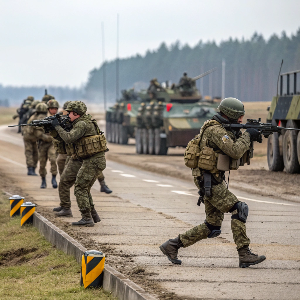 Actual actions to form a new system of Euro-Atlantic security and relevant changes relate to other aspects. At this, they began after Russia’s first attack on Ukraine in 2014. At the Wales NATO Summit in September of that year, it was decided to return to the Cold War-era Alliance Strategy, which was intended to deter the USSR and prepare for a possible attack by it. The Soviet Union was replaced by Russia. Also, relevant changes were made to the system of operational and combat training (OCT) of the NATO Allies. Besides, the issue of strengthening the Alliance’s forward military presence in Central and Eastern Europe and the Baltic States was raised.
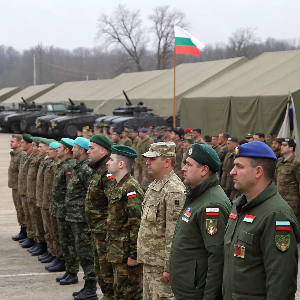
At the Warsaw NATO Summit in July 2015, such decisions were specified. In addition, the Alliance adopted a Comprehensive Assistance Program for Ukraine. In 2015-2016, practical measures were taken to implement those plans. In particular, by 2017, battalion-level multinational battlegroups were deployed to Latvia, Lithuania, Estonia, and Poland, led by the United Kingdom, Canada, the United States, and Germany, respectively. At the same time, the formation of two NATO Multinational Rapid Deployable Corps began, namely, Northeast, headquartered in Szczecin, Poland, and Southeast, headquartered in Sibiu, Romania. The former includes the Multinational Divisions (MD) Northeast, headquartered in Elbląg, Poland, and North, headquartered in Adazhi, Lithuania. The latter is the “Center” MD, headquartered in Szekesfehérvár, Hungary, and the “Southeast” MD, headquartered in Bucharest, Romania. The combat and numerical composition of the corps corresponds to the Combined Arms Army of the Russian Armed Forces.
The Response Force (also called the Immediate Response Force) was also created, with a total strength of 40,000 people, consisting of land, air and sea components. They include designated units of NATO member states on a rotational basis. The degree of their readiness to be used in case of a crisis has been increased.
The United States also began to take measures to strengthen its military presence in Europe. During the Cold War, the European Command of the US Armed Forces was located there, which included the Army (Ground Forces), Air Force, and Navy commands. Later, it was transformed into the US European and African Command, and its forces and capabilities were reduced. This mainly involved the withdrawal from Europe and disbandment of the 5th and 7th Army Corps of the US Army, as well as the relocation of most combat aircraft to the continental United States. However, the main headquarters structures stay.
In 2020, the 5th AC of the US Armed Forces was re-established with its headquarters in the Polish city of Poznan. It consists of: the 1st Division (Boleslawiec, Poland), 2nd Division (Mihai-Cogălnicăna, Romania), 2nd Armored Cavalry Regiment (Filsec, Germany; actually, a mechanized brigade), 41st Artillery Brigade (Grafenwoehr, Germany), 12th Helicopter Brigade (Germany). Like the above-mentioned corps, the 5th AC of the US Armed Forces is the equivalent of the Army of the Russian Armed Forces in terms of its combat capability.
In view of the above, at present, the US Army Command in Europe and Africa includes: Army (Ground Forces) Command – 5th Army Corps, 7th Training Command, 173rd Airborne Brigade, 56th Artillery Command (actually a missile brigade with tactical missile systems), 10th Air and Missile Defense Command (actually an anti-aircraft missile brigade), 21st Support (Logistics) Command; Air Force Command – 3rd Air Force; Navy Command – 6th US Navy Fleet in the Mediterranean. The 2nd Fleet of the US Navy in the Atlantic Ocean can be added to this.
In case of a threat of war, the US Armed Forces in Europe can be quickly reinforced by the deployment of at least one more army corps, airborne and marine units, and aviation. As a result, they would be equal to a military district or front of the Russian Armed Forces in terms of their emergency response capability.
The decision to deploy US troops in Poland on a permanent basis was made by US President D. Trump at the request of Warsaw during his first presidential term. In July 2020, the relevant agreement was signed by D. Trump and then-President of Poland A. Duda.
At the same time, measures are being taken to restore the command, control, communications, intelligence, and logistics systems of the NATO Allied Forces that existed during the Cold War. Special attention is paid to improving the capabilities of operational reinforcement of the NATO Allied Forces by moving US troops from the continental United States. For this purpose, military docking ships (loaded with equipment, weapons and necessary supplies in peacetime), military transport aircraft, commercial ships and aircraft (including ordinary passenger planes) can be used. And the warehouses in Germany, Belgium, the Netherlands, and Poland already have heavy equipment for the US troops that will be deployed to Europe.
Transport communications in Europe are being improved, and procedures for troops and military equipment to cross the EU’s internal borders are being simplified. These measures are combined within the framework of plans to create the so-called “Military Schengen”. These steps make it possible to accelerate the pace of redeployment of troops from the heart of Europe to the front lines. However, this is still not enough. In particular, the estimated time to move a division-level unit from France to Romania is thirty days, which is considered too long.
 Since Russia launched a full-scale war against Ukraine in February 2022, all such measures have taken on new significance. At the NATO Summit in Madrid in June of that year, a new NATO Strategic Concept was adopted, which defines new priorities, tasks, and approaches in the Alliance’s activity for the next ten years, taking into account the current security environment.
The document clearly identifies Russia as the main military adversary. At the same time, it enshrined a set of measures to deter it and enhance the Alliance’s ability to repel possible aggression. The main ones include strengthening NATO’s forward defensive lines by: further building up the Alliance’s forward military presence; transforming the NATO Response Force and increasing its size from 40 to 300 thousand troops; improving operational capabilities through strengthened command and control; and increasing the effectiveness of missile defense and air defense systems.
A decision was also made to change the defense plans. Previously, they had allowed for the possibility of a temporary withdrawal of NATO’s forward troops from the border to the depths of its territory, which was supposed to create more favorable conditions for a defense operation jointly with the main forces of the Alliance. After that, the situation was supposed to be restored by counterattacks. However, the mass atrocities and war crimes committed by the Russian Armed Forces in the occupied territories of Ukraine have demonstrated the inadmissibility of this approach. The new plans are based on strict border defense. This is another reason why the number of frontline troops is increasing.
In line with this approach, four more multinational battlegroups were formed in Bulgaria, Hungary, Romania, and Slovakia, led by Italy, Hungary, France, and Spain. As a result, their number reached eight groups in the area from the Baltic Sea to the Black Sea. At the same time, where necessary, the process of their deployment from battalions to brigades has begun. In 2024-2025, the first two such brigades appeared in Latvia and Lithuania.
In connection with Finland and Sweden’s accession to NATO in 2023-2024, the structure of the Alliance, the grouping of its troops and tasks on the northern flank of the European theater of operations are also changing. To date, NATO’s Allied Forces in Europe have included three joint commands, including: “Brunssum”, headquartered in the Netherlands, responsible for Northern Europe (Arctic region), Central and Central-Eastern Europe and the Baltic region; “South”, headquartered in Verona, Italy, responsible for Southern and Southeastern Europe and Turkey, the Mediterranean and Black Sea regions; “Lisbon”, headquartered in Portugal, is the rear command responsible for Western Europe. Each of them is subordinated to NATO’s ground forces, air forces and naval forces in their respective areas.
It was decided to create a new Joint Military Command of NATO’s Allied Forces North (the name may be different), which will include a joint group of troops from Norway, Finland and Sweden. It will be responsible for Northern Europe. Currently, the NATO Land Forces Command “Northern Europe” has already been established with its headquarters in Finland. In the short term, NATO Air Command “North”, headquartered in Sweden, and then Naval Command “North”, headquartered in Norway, are to be established. In addition, a battalion-level NATO forward group is being deployed in northern Finland, led by Sweden, which can be transformed into a brigade.
The overall air defense system and, accordingly, Europe’s is being strengthened. Following the incidents involving Russian UAVs and aircraft intruding into European airspaces in September, a decision was made to prepare “Operation Eastern Sentry”. It provides for the strengthening of the Alliance’s air defense on the Russian direction through the appropriate redeployment of air defense forces and assets. It is planned to create a so-called “Drone Wall”, that is, to build a separate system to counter UAVs. Ukrainian specialists are already being engaged and Ukrainian experience is being used for this purpose.
It is also proposed to transform the NATO Baltic Air Policing mission into a military defense operation. Obviously, this means increasing the number of NATO fighter jets that will protect and defend the Baltic airspace on a rotational basis.
It is also worth pointing out that the EU is creating its own Rapid Deployment Force (EU RDC) of 5,000 troops, which closely cooperates with the NATO (immediate) Response Force. This is a significant step in ensuring Europe’s ability to act quickly and decisively in case of a crisis.
Most of the CEE, South-Eastern European and Baltic countries are also taking separate measures to strengthen their armed forces at the national level. In particular, since 2014, Poland has formed a new division. The second is currently being formed. And Lithuania has reorganized a brigade of its armed forces into a division. Another separate brigade has also been created.
As part of the “Eastern Shield” program, Poland has begun construction of a system of defensive fortifications on its borders with Russia and Belarus. Lithuania, Latvia, and Estonia are doing the same, building the “Baltic Defense Line”.
 A system of countering hybrid warfare and cyber attacks from Russia has been built and is actively developing. Today, it is based on the European Centre of Excellence for Countering Hybrid Threats in Helsinki, Finland, and the NATO Cooperative Cyber Defence Centre of Excellence (NATO CCD COE). This is an extremely important issue, but we will consider it more extensively later, as this article is mainly about military aspects.
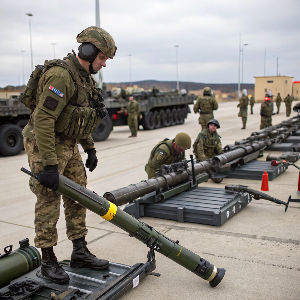 An important element in strengthening Europe’s security is its massive rearmament. At the European Council (EU summit) meeting in June, a decision was made to create a EUR 150 billion ($168 billion) Security Action for Europe (SAFE) fund.
The fund will be replenished by joint borrowing and will provide loans to EU members and a number of other countries, primarily Ukraine, for initiatives to strengthen their defense and develop the European military industry. The loans can be used for weapons systems through joint procurement, designed to rearm Europe as part of the implementation of the “White Paper on European Defense-Readiness 2030”.
At the same time, at the North Atlantic Treaty Organization summit, NATO leaders agreed to increase their defense spending to 5 % of GDP. This allows to eliminate the most acute contradictions between the Alliance members and to ensure adequate funding for measures to strengthen the collective defense of the Alliance.
Expenditures will be divided into two categories, namely: 3.5 % – for NATO’s basic defense needs; 1.5 % – for the protection of critical infrastructure, increasing civilian resilience, developing innovations and strengthening the defense industrial base.
Under this approach, the responsibility for rearmament of Europe lies mainly with the EU, while NATO is responsible for its defense. Each of the European Union countries that are also members of the North Atlantic Alliance has been assigned the relevant areas where they can be most useful. In particular, Germany takes the lead in strengthening European missile defense and air defense systems. In addition, Berlin can meet the needs of the EU armed forces for Leopard 2A8 tanks and Zidean-class submarines.
However, even before the adoption and implementation of these decisions, Europe had already significantly increased the capacity of its defense industry. For example, since 2022, the production of missiles has increased sixfold. Most of them are delivered to the Ukrainian Defense Forces.
Oleh Bereziuk, Heorhiy Zahorskyi, Yurii Mykhailenko,
Institute for Global Politics
To be continued…